|
WHAT
IS CGI?
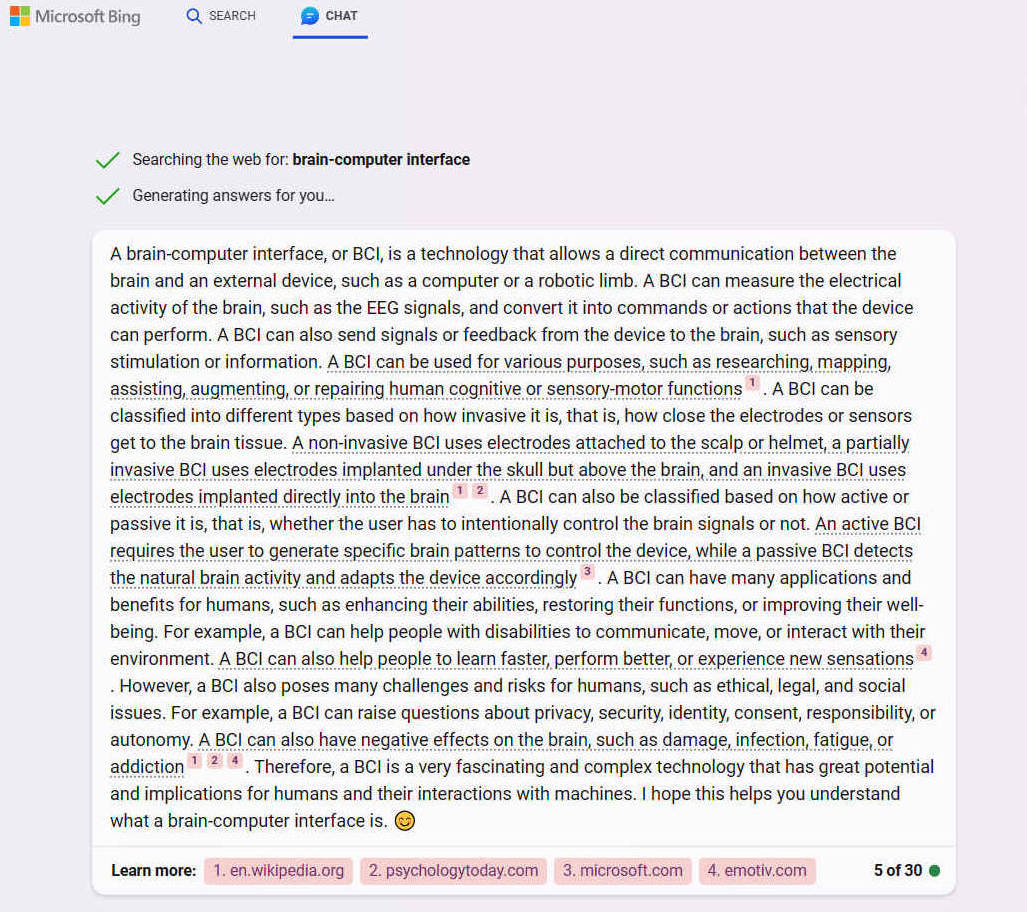
CGI is an acronym that can have different meanings depending on the context. In this case, I
we are talking about CGI in the context of art and media, not computing. CGI stands for computer-generated imagery, which is the use of computer graphics to create or enhance images in art and media.
These images can be either static (still) or dynamic (moving), and can be 2D or 3D animations, objects, or renderings. The type of art or media can be a film, television program, video game, or simulation. CGI can be used for various purposes, such as creating realistic or fantastical scenes, characters, or effects that would be difficult, expensive, or impossible to achieve with practical methods.
CGI can also be used to improve the quality, consistency, or continuity of existing images, such as removing wires, adding details, or correcting
errors. CGI has become a very common and powerful tool in the modern entertainment industry, and has been used in
films ranging from science fiction epics to quiet intimate dramas.
The
pictures are digital, thus can be stored on a computer.
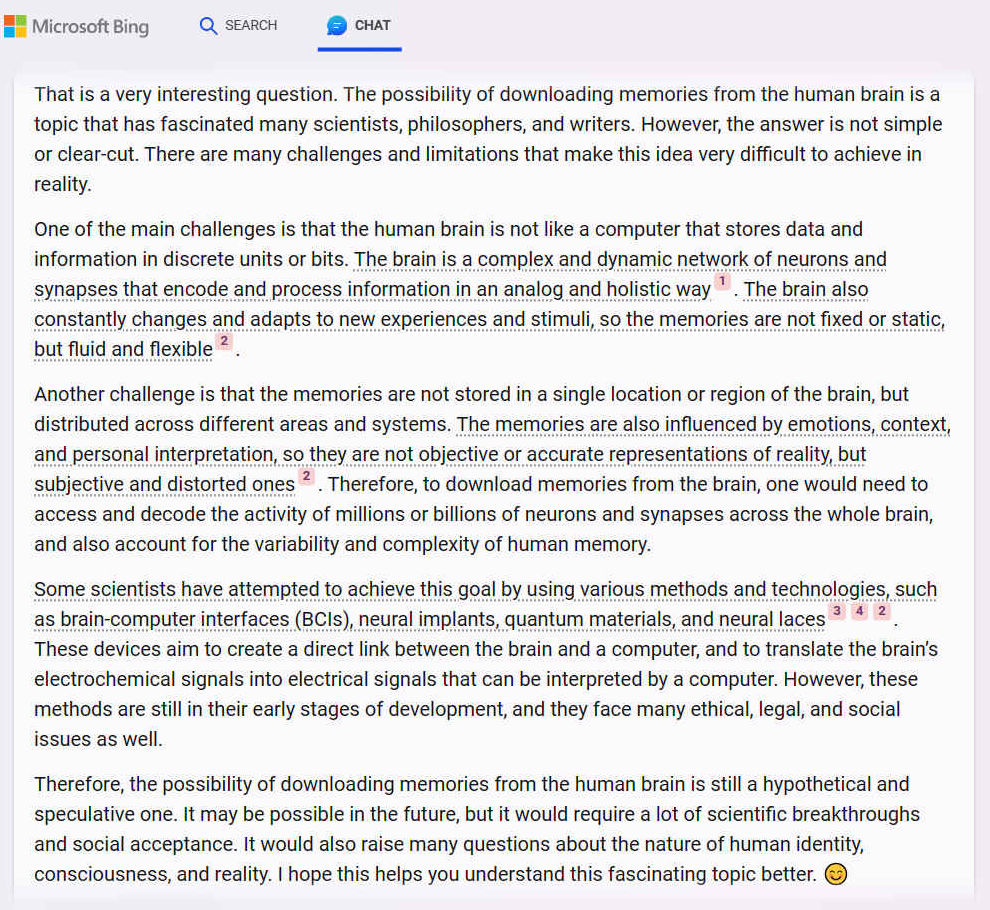
Using a direct link to the audio and visual cortex of the
brain, these images can be directly projected into the
subject, when the brain will store information in the usual
way. Thus, knowledge and memories can be created.
There are many CGI movies that have been made over the years, and some of them have been groundbreaking, artistic, or influential in the field of computer animation. However, ranking them is a subjective and difficult task, as different people may have different opinions, preferences, or criteria for what makes a good CGI movie. Therefore, I can only share with you some of the CGI movies that have been widely praised, awarded, or recognized by critics, audiences, or experts. Here are some of them, in no particular order:
Toy Story (1995): This is the first feature-length film to be entirely computer-animated, and it launched the successful franchise and studio of Pixar. It tells the story of a group of toys that come to life when their owner is not around, and their adventures with a new toy, Buzz Lightyear. The film was praised for its innovative animation, charming characters, witty humor, and heartfelt story.
Jurassic Park (1993): This is the film that revolutionized the use of CGI to create realistic and lifelike dinosaurs on the big screen. It is based on the novel by Michael Crichton, and it follows a group of scientists and visitors who are trapped in a theme park where genetically engineered dinosaurs have escaped. The film was acclaimed for its stunning visual effects, thrilling action, and captivating plot.
Avatar (2009): This is the film that broke box office records and became the highest-grossing film of all time until 2019. It is directed by James Cameron, and it depicts a futuristic conflict between humans and an alien race called the Na’vi on a distant planet called Pandora. The film was praised for its immersive 3D technology, spectacular CGI landscapes and creatures, and epic scope.
The Lord of the Rings trilogy (2001-2003): This is the film adaptation of the classic fantasy novels by J.R.R. Tolkien, and it follows the quest of a group of heroes to destroy a powerful ring that threatens to bring darkness to Middle-earth. The films were acclaimed for their faithful adaptation, massive scale, impressive CGI battles and characters, and emotional impact.
The Lion King (2019): This is the photorealistic remake of the 1994 animated classic by Disney, and it retells the story of Simba, a young lion who must reclaim his rightful place as king after his father’s death. The film was praised for its stunning CGI animation that recreated the African savanna and its wildlife with remarkable detail and realism.
These are just some examples of CGI movies that could be considered among the best ones to date. There are many more that could be mentioned, such as The Incredibles, WALL-E, Shrek, Spider-Man: Into the Spider-Verse, The Matrix, etc.

TOP
TEN CGI FILMS
10. "Titanic" is a perfect example of what good CGI can do for a movie.
One of the best uses of CGI was in James Cameron's "Titanic." In shots of the boat, Cameron took live action footage of actors (hanging out on board or jumping into the water) and digitally placed them onboard the model. The result was so convincing it befuddled even the legendary critic Roger Ebert.
9. "Jurassic Park" is an example of how just a little CGI can go a long way
Though most of the effects were done with animatronics, there are only four minutes of CGI in the whole movie, and the computer-generated parts still hold up. It shows how effective CGI can be when used correctly.
8. "Avatar" used 3D CGI in a way that had never been seen before.
Neytiri the Na'vi in 2009's "Avatar." 20th Century
Fox; Media Magik Entertainment/YouTube
Before "Jungle Book," "The Lion King," or any other live-action remakes, there was "Avatar."
The movie is comprised of about 70% CGI and was filmed in 3D. It still ranks as one of the most expensive movies ever made and is regarded as one of the best uses of CGI in history — no matter what people say about the plot.
7. "Gravity" pushed the use of CGI to a whole new level.
If nothing else, "Gravity" shows that it is possible to use a ton of CGI without sacrificing quality. Just look at the opening three minutes, which is pretty much entirely computer generated.
"Gravity" is an example of not only how far CGI has come, but also where it can go.
6. "Tron" is not a good movie, but it was important for the development of CGI.
Though not well-received, "Tron" was the first movie to put live actors into a computer generated world (literally the plot). The film includes at least 15 minutes of 3D
modeling in 1982.
The animation technology was so primitive that creators had to physically film the computer monitors they created it on in order to get the shots.
5. "The Matrix" used CGI so well in the bullet scene that a whole technique was named after it.
"The Matrix" hit theaters in March 1999. Warner
Bros.
"The Matrix" was the first movie to make use of an effect known as "bullet time," which was literally named after the famous scene in which Keanu Reeves dodges a hail of bullets in slow-mo as the camera runs at normal speed.
According to Vulture, the shot was achieved by lining up "120 side-by-side still cameras set to go off serially within microseconds of one another. Space and time could then be cleft in twain." Even with that explanation, it's still as mind-bending as the movie's plot.
4. The "Lord of the Rings" trilogy had a ton of great effects, but none more important than Gollum.
"The Lord of the Rings" trilogy is set in the fictional world of Middle-earth.
There's a lot of good CGI in the "Lord of the Rings" trilogy, but the best was saved for Gollum. As one of the earliest characters created with the use of 3D motion capture, he proved to everybody that the technique could be used without sacrificing an actor's facial expressions and movements.
3. "Toy Story" pioneered the use of 3D animation, which is commonplace today.
"Toy Story" arrived to theaters in November 1995. Walt Disney Studios
The graphics in "Toy Story" may look weird and outdated now, but in 1995 they were as fresh as Buzz Lightyear's spacesuit. Not only was this the first Pixar movie, but it was the first feature film to be made entirely with 3D animation, which is the basis for most modern CGI.
2. "Westworld" was the first movie ever to use CGI.
Yul Brynner in "Westworld." Warner Bros.
This is the movie that started it all. In a couple scenes, audiences are able to look through the eyes of Gunslinger, an evil robot. The shots are essentially just pixelated footage, which isn't much compared to today. The impressive part is that the film's creators didn't really have a model to follow, so they made their own with the help of a 1970s scanner, and inspiration from the first pictures of Mars.
1. "Terminator 2: Judgment Day" used CGI to create one of the most iconic villains ever.
"Terminator 2: Judgment Day" was released in July 1991. TriStar
James Cameron makes the list (again) with his innovative techniques. When "The Terminator" came out in 1984, the only way to make a robot come to life on screen was through animatronics and models.
"Terminator 2: Judgment Day" changed all that by using computer graphics to create the newer, scarier T-1000 villain. It was not only completely unique, but still holds up today as one of the best uses of CGI in a movie.

USING CGI TO CREATE MEMORY IMPLANTS
Humans
learn in a variety of ways. They learn by doing. By doing
ordinary things like walking, making things, where skills
are picked up, cooking, using ingredients, and the quickest
way of all is being told a story, such as watching a
documentary, or a film.
A
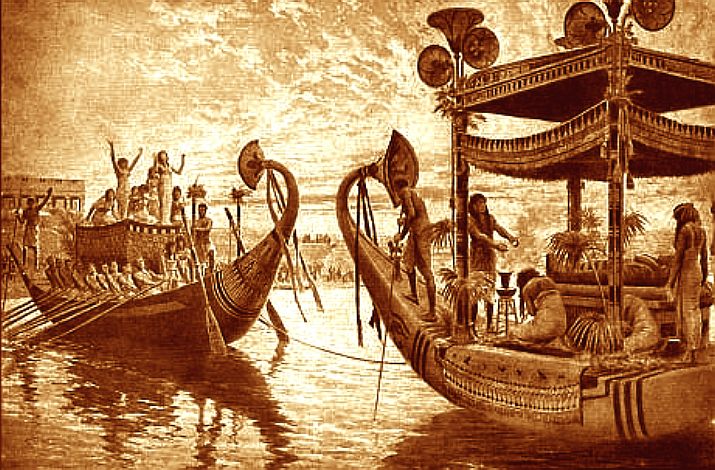
high value subject like Cleopatra,
might have memories created, and learn about history, by
making what amounts to a documentary series about her life.
Constructed like a series, the former Pharaoh Queen can be
taught all about herself quite quickly. The series would
have to include her early life, and be fed in, in a time
sequence, such that her brain's synapse firing sequence
might be as close to how her life actually developed. So
giving her the same character traits. In principle. She
would have to believe that she was the queen of Egypt.
Fortunately,
humans are incredible versatile and adapt quickly to new
surroundings. In all the (at the moment) three adaptations
of the cloning and rebirth concept, the antagonists would
need to treat the cloned Cleopatra
like royalty. Before they unleashed her on an unsuspecting
world. And then the Egyptian queen would be in for a major
culture shock. So much had changed in two thousand 2,000
years. So much so, that even the ordinary would appear
magical.
But
then, entering the world as a fully grown woman, she would
have few skills. Those would need to be taught, or uploaded
as muscle memory implants from other skilled donors. It
would need to be a crash course in day to day living.
ENHANCED
DIRECT TO BRAIN COMMUNICATIONS IN FICTION
In
the John
Storm adventure series, German, Italian and Swiss
scientists Rudolph
Kessler, Franco
Francisco and Klaus
von Kolreuter, have developed a method of gene splicing
using supercomputers and a DNA database. Having gotten that
far, their next problem was solving the problem of recreating
a past from a person long ago passed. They soon realised
this is not possible if the memories and synapse firing
sequence of a living subject cannot be replicated and
digitally stored before their demise.
They surmised, they may be able to
recreate Cleopatra's
memories from the rich history that has been documented.
Then the problem was solving the digital creation of those
memories, in a format that the brain might be able to
absorb. Eventually, they figured out that it was like
telling a story to the brain directly, via the generation of
audio and visual signals, much like the making of a film
using CGI. Then playing that digital upload, and supplanting
such information with news updates. And finally, when the
subject was sufficiently briefed as to their past, brining
them into the real world, where their eyes and ears
generated new information for the brain to process.
Hence,
this was no easy task, and a very expensive treatment.
Fortunately, Chatbox
artificial
intelligence came to the rescue as the starting point
for programming to do most of the creative work for them.
Including the creation of images to accompany the historic
information being fed to the neural complex, for biological
processing. All they needed to make this work, was an
interface with the brain. A 'Brain Computer
Interface, or
BCI. In this adventure the BCI the cohort come up with is
called the BioCore™.
The BioCore interfaces with the CyberCore
Genetica™ super-nano-computer, to enhance the
subject's brain function and communication abilities.
REFERENCE
1.
https://www.psychologytoday.com/us/basics/brain-computer-interface
2. https://www.microsoft.com/en-us/research/project/brain-computer-interfaces/
3. https://www.emotiv.com/bci-guide/
1.
https://www.psychologytoday.com/us/basics/brain-computer-interface
2. https://www.microsoft.com/en-us/research/project/brain-computer-interfaces/
3. https://www.emotiv.com/bci-guide/
1.
https://builtin.com/hardware/brain-computer-interface-bci
2. https://bing.com/search?q=benefits+of+using+a+brain-computer+interface
3. https://www.news-medical.net/news/20190911/Brain-computer-interface-huge-potential-benefits-and-formidable-challenges.aspx
4. https://www.insider.com/brain-computer-interface-what-is-it-how-does-it-work-2022-9
5. https://www.gao.gov/products/gao-22-106118
6. https://www.ablison.com/pros-and-cons-of-brain-computer-interface/
7. https://hbr.org/2020/10/what-brain-computer-interfaces-could-mean-for-the-future-of-work
8. https://www.frontiersin.org/articles/10.3389/fnsys.2021.578875/full
9. https://braininformatics.springeropen.com/articles/10.1186/s40708-023-00199-3
1.
https://builtin.com/hardware/brain-computer-interface-bci
2. https://bing.com/search?q=benefits+of+using+a+brain-computer+interface
3. https://www.news-medical.net/news/20190911/Brain-computer-interface-huge-potential-benefits-and-formidable-challenges.aspx
4. https://www.insider.com/brain-computer-interface-what-is-it-how-does-it-work-2022-9
5. https://www.gao.gov/products/gao-22-106118
6. https://www.ablison.com/pros-and-cons-of-brain-computer-interface/
7. https://hbr.org/2020/10/what-brain-computer-interfaces-could-mean-for-the-future-of-work
8. https://www.frontiersin.org/articles/10.3389/fnsys.2021.578875/full
9. https://braininformatics.springeropen.com/articles/10.1186/s40708-023-00199-3
CLEOPATRA
THE MUMMY - UNDER DEVELOPMENT
'Cleopatra
- The Mummy' followed 'Kulo-Luna.'
Kulo-Luna, the first completed script of the John Storm franchise (for which a draft
is available to read online). The John Storm
franchise is a series of
ocean awareness adventures, featuring the incredible solar
powered trimaran: Elizabeth
Swann. 'Cleopatra The Mummy,' could be a stand alone
movie, or fit in with
Kulo-Luna, or Treasure Island
as the prequel or sequel or any other sequence. The
order of production could be to suit identified gaps in
entertainment, in any particular year, after financial
consideration. Equally, the trilogy,
could be adapted for network television, as with Blood
and Treasure from CBS.
|